
Updated 17 February 2025 at 19:43 IST
How ASEAN Manufacturers Can Get BIS Certification For India And Avoid Challenges
ASEAN countries have a strong presence in industrial products, materials, and heavy manufacturing.
- Initiatives News
- 3 min read

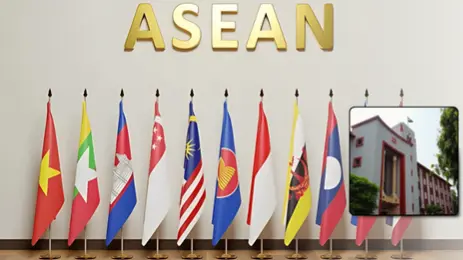
ASEAN countries have a strong presence in industrial products, materials, and heavy manufacturing. Sectors such as aluminium and aluminium alloys, air filters, ferromanganese, copper products, and general-purpose shoes contribute significantly to infrastructure and industrial development. India, as a vast consumer market, offers immense opportunities for ASEAN manufacturers. However, to sell these products in India, manufacturers must obtain BIS certification to ensure compliance with Indian standards.
Several ASEAN countries export critical industrial and consumer products to India. Malaysia supplies aluminium and aluminium alloy ingots, air filters for general ventilation, ferromanganese, and copper products such as ingots, castings, solid-drawn copper tubes, copper rods, and bars for electrical applications. Indonesia exports general-purpose shoes, stainless steel butt hinges, and polyester continuous filament fully drawn yarn. Taiwan is known for exporting copper wire rods for electrical applications, polyester continuous filament fully drawn yarn, bolts, nuts, fasteners, and copper wire and rods for electrical applications. Vietnam primarily exports general-purpose shoes, while Thailand supplies polyester continuous filament fully drawn yarn, household and similar electrical appliances, bottled water dispensers, steel products, copper tubes for plumbing, copper rods, and bars. For these manufacturers, obtaining BIS certification is a legal requirement for market entry in India.
ASEAN manufacturers can obtain BIS certification through the Foreign Manufacturer Certification Scheme (FMCS), which allows foreign companies to get their products tested and certified according to Indian standards. The certification process involves several key steps. The manufacturer must first submit an application to the Bureau of Indian Standards (BIS) along with relevant product details. The next step involves product testing, where samples are tested in BIS-approved laboratories to verify compliance with Indian safety and quality standards. Following successful testing, BIS officials conduct a factory inspection to ensure that production processes meet Indian regulations. Upon successful inspection and testing, a BIS license is issued, allowing manufacturers to use the ISI mark on their products.
Without BIS certification, ASEAN manufacturers face multiple challenges when attempting to enter the Indian market. Legal barriers prevent Indian authorities from permitting the sale or import of non-BIS-certified products. Market exclusion is another challenge, as retailers and distributors refuse to stock products without certification, leading to restricted business opportunities. The absence of certification also results in a loss of credibility, as Indian consumers prioritize certified products due to safety and quality assurances, impacting brand reputation. Additionally, Indian customs authorities can seize or reject non-compliant imports, leading to financial losses and delays.
Advertisement
Obtaining BIS certification can be complex for foreign manufacturers. Aleph INDIA, a leading BIS consultant in India, simplifies the process by providing expert guidance on compliance, documentation, testing, and certification. With over 16 years of experience, Aleph INDIA ensures that ASEAN manufacturers meet all necessary standards efficiently, enabling them to access the Indian market seamlessly. For ASEAN manufacturers aiming to expand their footprint in India, partnering with Aleph INDIA and leveraging the FMCS BIS Consultant in India services can streamline the certification journey and prevent unnecessary delays.
Advertisement
Published By : Abhishek Tiwari
Published On: 17 February 2025 at 19:43 IST