
Updated 22 August 2024 at 14:27 IST
Mysterious Object Moving Fast Enough to Escape Milky Way Puzzles Scientists
Citizen scientists recently discovered an object moving through the Milky Way at such a surprising speed that it could potentially escape the galaxy.
- Science News
- 2 min read

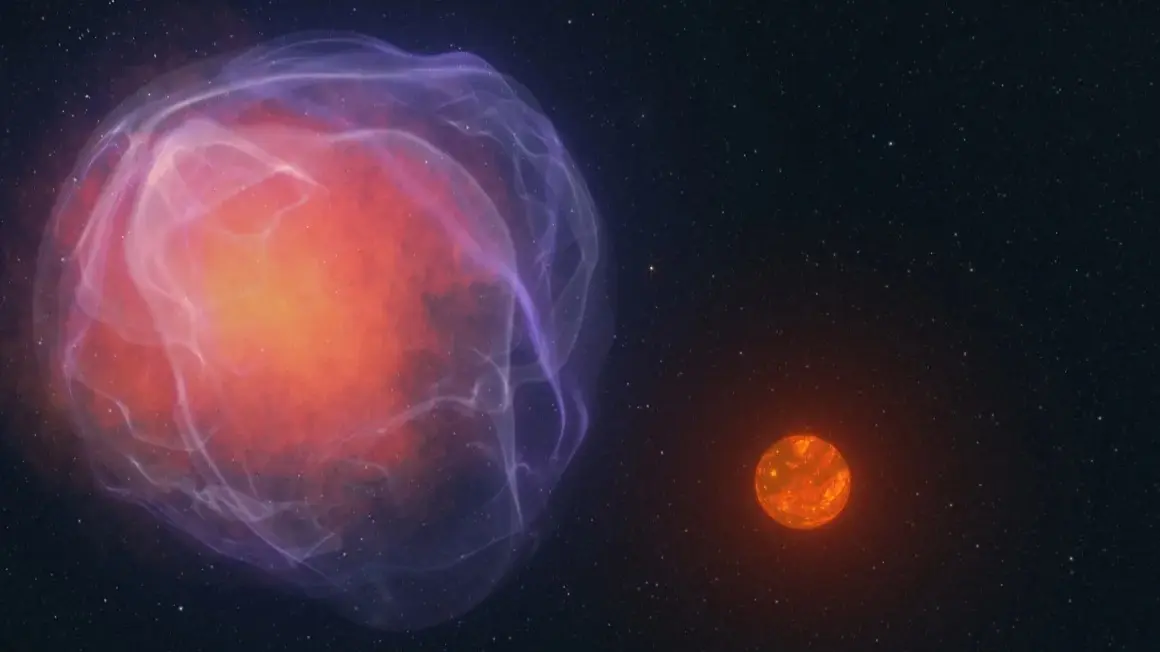
Citizen scientists recently discovered an object moving through the Milky Way at such a surprising speed that it could potentially escape the galaxy's gravitational pull and venture into intergalactic space, according to new research.
This object, appeared to be a faint red star, is moving through space at approximately 1.3 million miles per hour (600 kilometers per second). In contrast to the Sun orbits the Milky Way at a much slower speed of 450,000 miles per hour (200 kilometers per second).
As per a team of astronomers and citizen scientists whose study has been accepted for publication in The Astrophysical Journal Letters this mysterious object would be first called “hypervelocity” very low-mass star, if confirmed.
Low-mass stars are more common than high-mass stars because star formation tends to favor smaller objects, and larger stars have shorter lifespans. However, low-mass stars are also harder to detect due to their cooler temperatures and lower brightness according to a study by coauthor Roman Gerasimov, a postdoctoral research fellow in the department of physics and astronomy at the University of Notre Dame.
Advertisement
Hypervelocity stars, which were first theorized in 1988 and discovered in 2005, are extremely rare, making this discovery particularly exciting.
Volunteers from the project Backyard Worlds: Planet 9 first detected the star, named CWISE J124909.08+362116.0, or J1249+36 for short.
Advertisement
The project aimed to find undiscovered objects or the hypothetical Planet Nine in the outer reaches of the solar system beyond Neptune by analyzing data from NASA’s Wide-field Infrared Survey Explorer (WISE) mission.
This mission mapped the sky in infrared light from 2009 to 2011 and was later repurposed to monitor near-Earth asteroids and comets before its retirement on August 8.
J1249+36 caught the attention of citizen scientists sifting through the WISE data due to its incredible speed—about 0.1% of the speed of light. “I can’t describe the level of excitement,” said study coauthor Martin Kabatnik, a citizen scientist from Nuremberg, Germany. “When I first saw how fast it was moving, I was convinced it must have been reported already.”
Further observations with multiple telescopes confirmed the star’s extraordinary velocity and trajectory. "This is where the source became very interesting, as its speed and trajectory showed that it was moving fast enough to potentially escape the Milky Way,” explained lead study author Adam Burgasser, professor of astronomy and astrophysics at the University of California San Diego.
Published By : Srujani Mohinta
Published On: 22 August 2024 at 14:27 IST