
Updated 26 August 2021 at 07:25 IST
Fastest orbiting asteroid gets hot enough to melt lead; Know all about its journey
If it isn't expelled from its current route by a gravitational interaction first, 2021 PH27 will most certainly collide with the Sun, Mercury, or Venus.
- Science News
- 3 min read

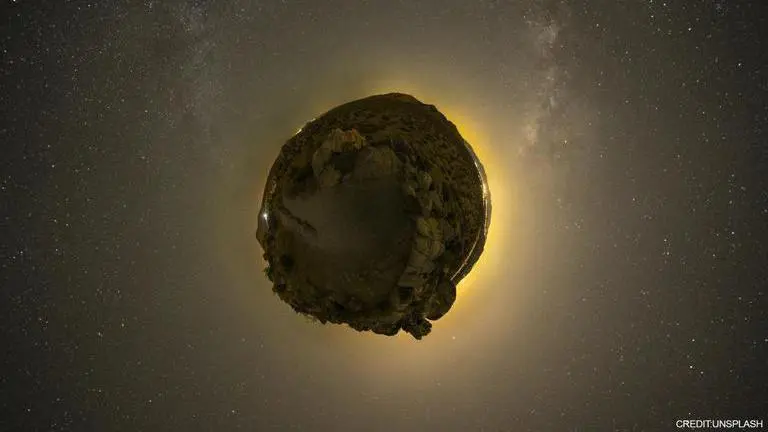
A newly discovered asteroid orbits the sun faster than any of its known relatives. The space rock, dubbed 2021 PH27, orbits our star once every 113 Earth days, according to its discoverers. Except for Mercury, which revolves around the Sun in 88 days, this is the shortest orbital period of any known object in the solar system. The discovery was announced by astronomers at the Carnegie Institution for Science (CIS).
Hot enough to melt metal
2021 PH27 follows a significantly more elliptical route than Mercury and hence approaches the Sun from a closer distance. At its nearest point to the star during its journey, the asteroid is at a distance of around 12.4 million miles (20 million kilometres) from the sun. In comparison, the closest Mercury reaches to the Sun is 29 million miles (47 million kilometres).
At that distance, the surface of PH27 touches a temperature of around 900 degree Fahrenheit (500 degree Celsius), hot enough to melt lead. The asteroid also has the highest general relativity effects of any known solar system object due to its deep dips into the sun's gravitational well. The team of discoverers noticed a tiny wobble in 2021 PH27's elliptical orbit around the sun as a result of these factors.
Unstable PH27 may collide with the Sun
PH27's orbit isn't very stable. If it isn't expelled from its current route by a gravitational interaction first, 2021 PH27 will most certainly collide with the Sun, Mercury, or Venus a few million years from now, according to the team of scientists.
Advertisement
The asteroid's orbital path is 32 degrees inclined from the plane of the solar system. With such a steep inclination, it's more likely to be an extinct comet that formed in the remote reaches of the solar system and was captured in a tighter orbit after passing by Mars, Earth, or any other rocky planet.
Astronomers utilising the Dark Energy Camera (DEC), a powerful multipurpose instrument located on the Victor M. Blanco 4-meter Telescope at the Cerro Tololo Inter-American Observatory in Chile, first detected 2021 PH27 on 13 August.
Advertisement
Additional observations by the DEC and Magellan Telescopes at the Las Campanas Observatory in Chile, as well as smaller scopes operated by the Las Cumbres Observatory in Chile and South Africa, helped the team to pin down the asteroid's orbit over the next few days. According to reports, some scheduled observations with such instruments were postponed as a result of the 2021 PH27 push, but team members believed the rescheduling was worth it.
Published By : Srishti Goel
Published On: 26 August 2021 at 07:25 IST